



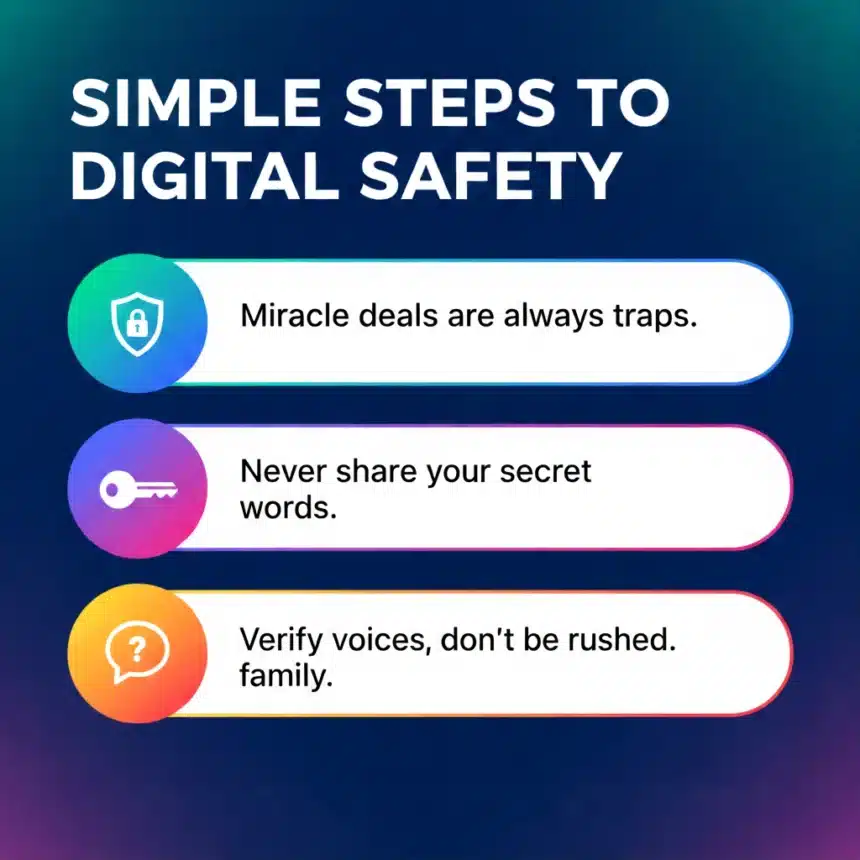
Key Highlights
- Never share your secret words or passwords with anyone, as these are the only keys to your money.
- Ignore offers that promise free money or fast riches, because real investments never work that way.
- Stop and verify any urgent request for help, even if the voice or video looks and sounds like someone you love.
- Never let a stranger view your screen or rush you into making a quick decision with your savings.
Keeping Your Digital Life Safe
The world is changing fast. We now have digital money that lives only on the internet and “smart” computer programs that can talk, write, and even mimic voices just like a human. While these inventions are exciting, they have also given dishonest people new ways to trick us.
You don’t need to be a computer expert to stay safe. Protecting yourself is mostly about using your common sense and knowing which “digital doors” to lock. Here is a simple guide to keeping your money and your identity safe in this new age.
1. The “Too Good to Be True” Rule
The most common way people lose money with digital currency is through greed. Someone might message you saying they found a way to double your money overnight, or a “famous person” on social media is giving away free coins if you just send them a little bit first.
The Golden Rule: If a stranger or even a friend who seems to be acting strangely offers you a deal that sounds like a miracle, it is a trap. Real investments don’t promise guaranteed wins, and they certainly don’t ask you to pay them first to “unlock” a prize.
2. Don’t Let a Computer Voice Fool You
Modern computer programs (often called AI) can now copy a person’s voice perfectly. A scammer might call you sounding exactly like your grandson or a close friend, claiming they are in trouble and need money sent immediately via a digital payment.
What to do:
- Create a “Family Password”: Pick a secret word that only your family knows. If someone calls in a panic, ask for the word.
- Hang up and call back: If you get a scary call, hang up and call that person back on the phone number you have saved for them. Don’t trust the number that just called you.
3. Your “Keys” Are for Your Eyes Only
When you use digital money, you are usually given a secret list of words (often called a “seed phrase”). Think of this list as the physical key to a safe that holds all your cash.
- Never type these words on a website.
- Never share them with anyone, even if they claim to be from “support” or the “bank.”
- Write them on paper and hide that paper in a safe place in your home. If you lose those words or someone else sees them, your money is gone forever, and no one can get it back for you.
4. Watch Out for “Digital Masks”
Computers can now create fake videos or photos of people that look 100% real. You might see a video of a news anchor or a billionaire telling you to invest in a specific project. This is often a “digital mask” designed to trick you.
How to spot a fake:
- Look at the person’s blinking. Sometimes fakes don’t blink naturally.
- Watch their mouth. Does the sound match the way their lips move perfectly?
- Check the source. Is this video on an official news website, or just a random post on social media?
5. Slow Down and Breathe
The biggest tool a scammer has is urgency. They want you to feel rushed. They will say “The offer ends in 10 minutes!” or “Your account will be deleted in one hour!”
When you feel that internal panic, that is your signal to stop. Scammers love it when you are too rushed to think. Take five minutes, get a glass of water, and talk to a trusted friend or family member before you click any links or send any money.
6. Lock Your Digital Doors
Just like you lock your front door at night, you should lock your digital accounts.
- Use “Two-Step” Security: This is when a website sends a code to your phone before letting you log in. It means even if someone steals your password, they still can’t get into your account.
- Keep your phone updated: When your phone or computer asks to “update software,” do it. Those updates are often just “patches” that fix holes where thieves could crawl through.
7. Avoid “Helper” Software
Sometimes, a person pretending to help you with your digital money will ask you to download an app that lets them “see your screen” so they can guide you. Never do this. Giving a stranger access to your screen is like handing a thief the keys to your house and walking out the front door.
The digital world can be a great place, but it pays to be a little bit stubborn. Don’t trust easily, keep your secrets safe, and always remember that in the world of money, there are no shortcuts.