


Key Highlights
- Massive Building Contest: The EU will open a final competition in early 2026 for countries to host up to five massive, new computer facilities (called ‘Gigafactories’) that will act as giant brain-training hubs.
- Focus on Independence: The main goal is for Europe to stop relying on other global powers for advanced computing, ensuring the continent can create its own future generation of smart computer brains and intelligent tools.
- €20 Billion Funding: The project is supported by a large €20 billion fund, with the EU and governments paying for the construction, and private companies being required to invest heavily to operate and run the centers.
- Fierce Competition: Over 70 initial proposals were received, making the contest for the few available sites intensely competitive among member states like Germany, Portugal, and Finland.
The Great Contest Begins Soon
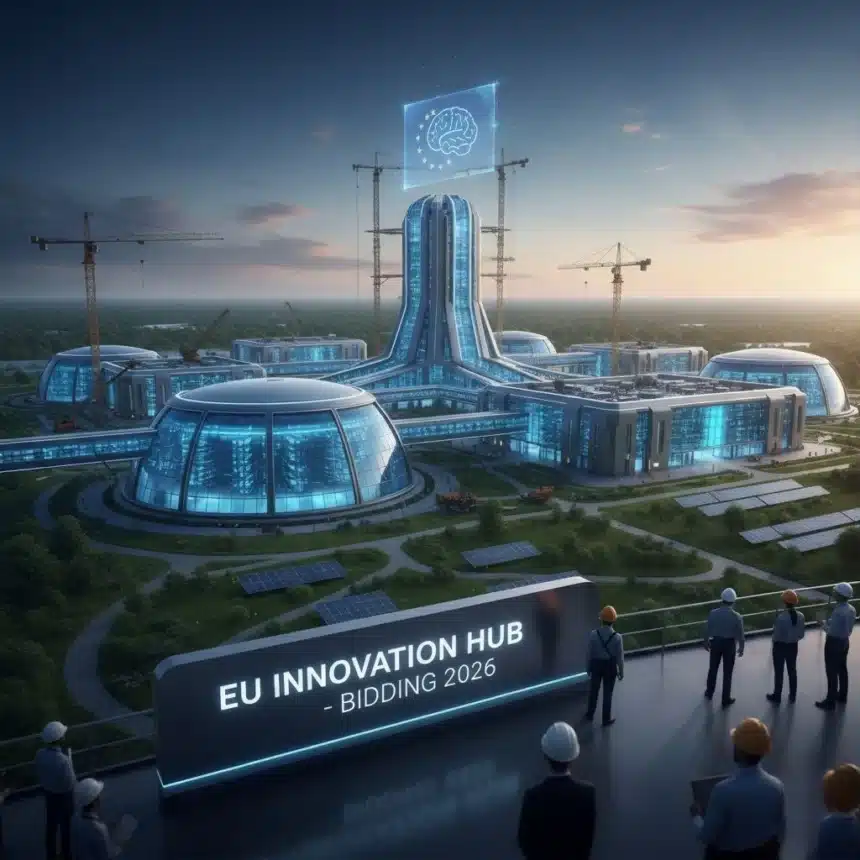
In what is perhaps Europe’s most determined move to control its own future in the digital world, the stage is being set for a massive, continent-wide competition. Early in 2026, the European Union plans to launch the final, decisive contest that will determine where up to five enormous, state-of-the-art computer complexes which we can call giant brain-training hubs will be built.
This effort is not about traditional factories making cars or batteries; it’s about building the biggest, fastest thinking machines the continent has ever hosted. The goal is clear: to ensure Europe can develop its own advanced, smart computer programs without relying on companies or nations across the globe. This entire initiative is essentially a declaration of independence in the world of advanced computing power.
Europe’s leaders recognize that the power to create the next generation of intelligent tools the programs that can write articles, design new medicines, or manage power grids rests in the hands of those who possess the biggest, fastest computational engines. Right now, much of that raw power lies across the oceans. The mission is simple but profound: to gather massive power, data, and talent under one roof, creating an environment where Europe’s best thinkers can invent the future.
What Exactly are These Giant Brain-Training Hubs?
When the EU talks about these massive new facilities, they aren’t referring to dusty old manufacturing plants. Imagine a massive, specially constructed building designed to house not products, but incredibly powerful, fast-thinking equipment. Think of it as a huge, specialized gym dedicated entirely to training the minds of computers.
The core of each center will be packed with thousands upon thousands of the tiny, special brain-parts, or processors, needed to handle complex thought processes at lightning speed. Reports suggest each facility could hold around 100,000 of these cutting-edge parts. They need to be big because the task is huge.
The primary job of these centers is to train new smart computer brains. These are the programs that can generate new things like tools that can write natural-sounding text, create realistic images, or quickly find patterns in huge piles of information that a person could never sort through. By having this massive internal power, European companies and researchers will finally have the toolset needed to compete with the global giants, ensuring that the smart tools used across Europe are reliable and built on European values and rules.
Putting Up the Huge Piles of Money
To turn this grand vision into a reality, the EU has set aside a remarkable fund, dedicating a total of €20 billion to support the creation of these hubs. This money is designed to anchor Europe’s future digital structure.
The funding model is a crucial part of the plan: it’s a shared cost. The European governments and the EU itself will provide a significant chunk of the money needed to build the facility up to 35% of the total construction cost. The rest, and all the money needed to actually run the centers day-to-day, must come from private groups and companies. This ensures that the projects are not just government fantasies, but sustainable businesses backed by industry leaders.
To make sure the project plans are solid and can actually get built, the European Commission recently teamed up with the major European banking group. This group is stepping in to offer expert advice to the teams, or consortia, who want to host one of these centers. They are helping them turn their ambitious concepts into realistic, bankable plans. This guidance is key before the formal bidding contest opens in early 2026.
The Fierce Race to Host the Center
The announcement of the formal competition next year follows a massive wave of interest from across the continent. When the EU asked for initial ideas, they received a staggering 76 expressions of interest from various countries, all hoping to host one of the coveted facilities. Since only four or five can be selected, competition is incredibly fierce, leading to complex negotiations where smaller proposals may have to merge into bigger, joint bids.
Countries like Germany, Portugal (which has secured backing from major global technology firms), and Finland (already home to a large, existing computing facility) are among the nations publicly pushing to host a site. The final decision will prioritize locations that can demonstrate strong, collaborative teams bringing together national governments, major companies, universities, and research institutes.
Looking Ahead to the Future
Despite the excitement, the plan is not without its questioners. Some industry voices have raised concerns, asking if Europe is building this massive power ahead of demand. They wonder if there will be enough work for such huge computers right away.
However, European officials stress that this is a long-term strategic investment. The goal is not immediate, short-term profit, but securing Europe’s capability for decades to come. As one supporting group noted, in technology, “you often need to invest in capacity ahead of demand.”
By moving forward with the formal selection process in early 2026, Europe is taking a decisive step, moving from policy to construction. It’s an urgent race to secure a vital seat at the table of global innovation and ensure that the continent remains a strong force in the coming age of powerful, intelligent machines.