



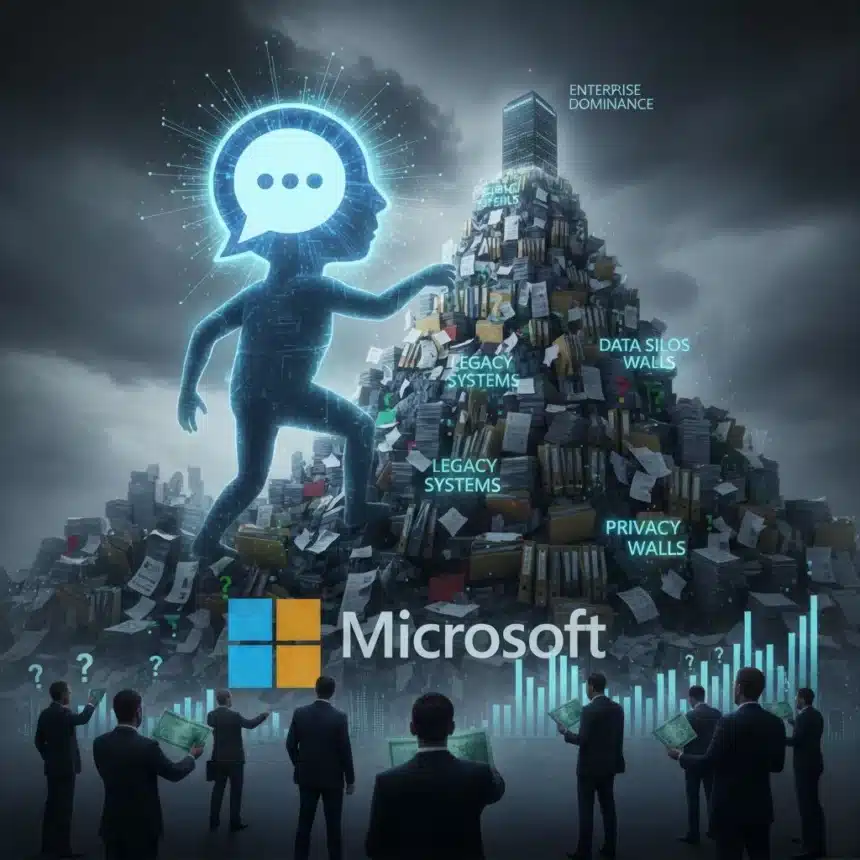
Key Highlights
- Companies are slow to adopt Microsoft’s new AI chatbot (the “Office Genius”).
- The main roadblock is messy internal data, which must be cleaned up first for the AI to work safely.
- Businesses are hesitant to pay the high cost without clear proof that the AI saves more money than it costs.
- Employees need training on how to properly use the AI, and some worry about job changes.
Microsoft’s Climb to Get Everyone Using Its Smart Assistant
Microsoft, the company whose software runs almost every big office in the world, is facing a tough challenge. They’ve rolled out a super-smart new AI chatbot, let’s call it the “Office Genius” that can write emails, summarize long meetings, and generally make work faster. You’d think everyone in the business world would jump at the chance to use it, especially since most of them already use Microsoft programs like Word and Outlook.
But the truth is, most big companies are taking their time. Microsoft has the keys to the kingdom when it comes to business software, yet they are finding it to be a hard struggle to get their new AI helper into everyone’s daily work routine.
Why Companies Aren’t Rushing In
It’s not because the technology is bad. The reasons for the slow speed are much more human and practical.
Messy Digital Files
The Office Genius only works well if the company’s own information is neat and organized. Think of it this way: the smart helper reads all your company’s documents, emails, and notes to give you a helpful answer. But if your internal files are a mess, if secret files are sitting in folders where everyone can see them, or if old, wrong information is mixed in with the new, the smart helper will simply pull out the messy, wrong, or even secret data.
Companies have to “clean house” first. They need to carefully sort out who is allowed to see what. This is a huge job that takes a lot of time and effort before they can safely let the smart helper start working.
The High Price Tag
The new AI helper isn’t cheap. It’s an extra, high cost added on top of what companies already pay for their Microsoft tools. Before a big boss approves spending a lot of money on a new tool for thousands of employees, they need to see clear proof that it will save more time (and therefore money) than it costs.
Right now, many companies are having a hard time measuring the exact benefit. Is a worker who writes emails faster truly doing double the work? It’s hard to put a solid number on that saving, which makes the people who sign the checks nervous about spending the money.
Fear and Needing Lessons
People are naturally hesitant about big changes. Some employees worry that using a smart helper will make them look lazy or that the AI will simply take over their job.
Even for those who are happy to use it, they need to learn how to talk to the AI properly. You can’t just ask, “Fix this report.” You need to be specific: “Take the main ideas from the sales report and write them as three short points for the CEO’s meeting.” This is a new skill that requires good lessons, and many businesses haven’t fully invested in teaching their staff how to be good “smart helper managers.”
What Microsoft Must Do Next
Microsoft’s challenge isn’t selling the idea of a smart helper; it’s helping companies get ready for it.
They need to focus less on how clever the AI is and more on becoming a partner to help businesses with the boring, necessary tasks: cleaning up file access, proving that the tool is a good deal financially, and training the everyday worker.
Until companies feel safe that their secrets won’t be exposed, sure that the tool is worth the money, and confident that their employees know how to use it, the Office Genius will remain a powerful tool that mostly sits unused. Microsoft has the right product, but the road to getting everyone to use it is a long race of preparation, not a short sprint.